


Table of Contents

Flir Rs32 Thermal Scope
The technology behind thermal scopes used to be prohibitively expensive. Flir Rs32 Thermal Scope. This made them available only to those with deep pockets and large budgets, like the police and military agencies. But with all the advancements of technology, cost of thermal scopes has dropped dramatically and they’re now more accessible than ever before.
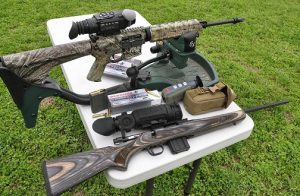
The increased accessibility of thermal scopes has led to an increase in demand for night-time hunting activities like coyotes and hogs. In turn, this increasing demand from consumers has prompted many companies to get into the market and provide thermal scopes available to a larger group of shooters and hunters than ever before. Whether you’re looking to get your first or upgrade to an more advanced model, we’ll help you discover some examples of best thermal scopes so that you can also participate in the fun.
Best Thermal Scopes In 2022
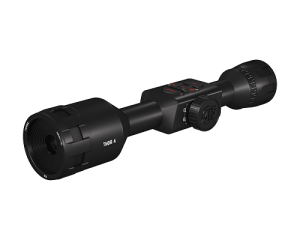
- Best Value for Money: OPMOD Thor LT 3-6x
- Best Over $5000: Trijicon IR Hunter MK3
- Best Thermal Scope Under $5000: AGM Secutor TS25-384
- Best Thermal Scope Under $1000 ATN Thor HD 384 2-8x
- Best Thermal Scope for Budget: ATN Thor 4 384 1.25-5x
- Best for Hunting: ATN Thor LT 160 3-6x
- Best Hog Hunting Thermal Scope: Sig Sauer Echo 3
- Best Clip-On Thermal Scope Burris BTC 50
- Ideal for Surveillance: Trijicon IR-Patrol IRMO 300 Rifle Kit
Things to Consider Before Buying a Thermal Scope
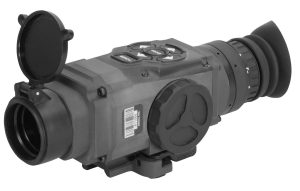
It’s likely that you’ve figured out by now you know that best thermal scopes aren’t cheap. Most people aren’t going to go out and drop a sizable chunk of change on the purchase of a thermal scope on a whim. There are some things that you should think about first before making a decision on what thermal scope is the best choice for you. (Or really, if you even actually need one, or if the money would be better spent elsewhere.)
If you look on the internet, you will find companies that offer thermal scope rentals. This is a great way to try out various designs and get a feel of the features you prefer best before committing to purchasing. Flir Rs32 Thermal Scope.
Obviously, the final decision lies with you However, if you decide that your next big gun-related purchase will be an thermal scope and you are considering it, here are some suggestions of things you should consider prior to spending your hard-earned cash:
Battery Life
There’s plenty of technology packed into the thermal scope, and it’s required to be powered by some type of battery to run it. All batteries are not created equal, and so you want to be sure that your thermal scope is powered up for the time you need it. That means you should take into consideration how long you plan to use the scope in a single session, how long does it takes to charge the scope, and what will spare batteries cost.
Extra Features
Certain thermal scopes come with WiFi, GPS, Bluetooth and more. These are all really cool features however you need to think about what you’ll use the thermal scope in and determine whether these extra features are worth it or not. Consider, for instance is it really necessary to be able for streaming of your scope picture to your mobile device?
Price and Budget
The best thermals are going to exceed $5000. Although these are typically the most expensive scopes you can buy however, you can get practical use from options in the $2000-$5000 range. If you’re looking for a low-cost thermal scope under $1000, you won’t find one. There will be some thermal scopes under $2000 but be brand-specific to ensure a good warranty and money-back guarantee coverage as quality control issues must be anticipated in this price range.
Size And Weight
Thermal imaging scopes have been huge and heavy. The typical weight of a thermal scope for a rifle scope is about 2 pounds. Lightweight thermals weigh between 1-1.5 pounds, which is equivalent to regular daylight rifle scopes. While thermals might be the same length of traditional rifle scopes, and even smaller however, the internal components that are required to provide thermal imaging makes them wider. Their overall weight and size can affect your hunting or tactical weapon as well as sight system.
A compact and lightweight option is to look into a clip-on system. In addition to reducing the weight and size, but they’re specifically designed to be placed in front of your daytime scope and should be easily removable and attachable.
Detection/Recognition Ranges
Thermals can offer over 1000+ yards of detection range on targets in all the day and night conditions. However the distance at which you are able to recognize and pinpoint what you are looking for will be much shorter.
These ranges can differ among manufacturers models, models, and the quality. The thermal detector sensitivity will be the prime factor you will be looking into. Increasing magnification can help to quickly recognize and identify an object that is far away, but it could also result in poor pixelage resulting in a blurred image. Display resolution is also a factor in what the image quality is. sight picture. Flir Rs32 Thermal Scope.
Which is Better Thermal Or Night Vision?

Instead of looking at the fact that a night vision scope can be better than thermal or vice versa, the primary problem is:
Which one would work best for your requirements and budget?
By the end of this article, you’ll know precisely the answer.
Let’s get started!
Night Vision
Night vision operates by taking light or reflections of light and transforming them into the crystal clear image.
Therefore, it needs some sort of ambient light for its operation.
If you shoot at night the moon’s light and stars usually provide enough light. Modern models have infrared illuminations that function as flashlights to illuminate the scope however they aren’t visible to the naked eye.
If you’re looking through marketplaces for night vision optics, you’ll see different ratings for them – Gen II, I, or III. The simpler the definition, the more the grade, the better the quality.
Also, you’ll see a more recent classification of night vision scopes that is called Digital Night Vision.
The standard night vision shows the standard green and black as the new digital night vision is usually displayed in black and white across the screen of the LCD.
Pros
- Night vision delivers a higher quality image.
- It permits you to distinguish between the finer detail. In addition, night vision scopes are more affordable and more compact in dimensions. It’s not subject to cold weather.
The night vision technology has been in use for a long time, much more as thermal optics. Night vision scopes are used to be mounted on rifles and are overall more rugged, stable, and absorbs recoil with the same ease as a champion.
Cons
- Its need for ambient light makes night vision limited.
So unless you have an infrared illumination device that isn’t in use, it’s useless in completely dark environments. It can’t be used in sunlight as it could will be permanently damaged if exposed to a high-intensity light.
Thermal Imaging
Thermal scopes detect radiation or heat given off by living objects. Thermal imaging employs a specific kind of lens that focuses at infrared light and produces the thermogram. The thermogram is later converted into electrical impulses that become the image you see that appears on the screen. Flir Rs32 Thermal Scope.
Pros
- The thermal vision is a little more versatile since it can be used in any lighting conditions. In fact, one of the greatest benefits to thermal imaging scopes is that they are able to function properly in daylight and night and don’t require infrared light. Additionally they allow you to be able to see through smoke, dust, and fog with ease. This is why firefighters use thermal technology.
Cons
- The main disadvantage of thermal imaging is that it is quite heavy to carry. It is also costly and you might have to undergo training to interpret the images correctly. The battery’s life span is typically short and the quality of the image may be affected by temperatures that are colder.
Frequently Asked Questions
What is the length of time a Thermal Scope last?
On average, thermal scopes run for about eight hours with a single charge. The various models can last between 2 to 10 hours. Recently, ATN has managed to produce ultra-low-consumption thermal scopes which provide more than 10 hours of continuous usage.
Why are Thermal Scopes so Expensive?
The majority of the time, thermal scopes can be expensive because of the advanced technology components. There are also differences in cost for various features, such as Bluetooth connectivity and palette mods as well as ballistics applications and more. However, thermals start at a affordable price of $1000.
How far can Thermal Rifle Scopes see?
The distance thermal rifle scopes can see depends on factors such as resolution and the magnification setting. In general, even entry-level thermals are able to detect the heat signatures up to 1,000or more yards. Top-quality thermals are able to detect heat signatures that extend beyond 4,000 yards, but the identification of targets is a different matter.
Can You Make Use of Thermal Scope in Daylight?
Contrary with night vision scopes, you can also use thermal scopes instead. You can use a thermal scope throughout the day without damaging components. Instead of amplifying light, thermal scopes read heat signatures. Dual-use capabilities are a major benefit of choosing thermal rather than night vision and getting the most of your purchase. Flir Rs32 Thermal Scope.
