


Table of Contents

Thermal Scope 3-12x
The technology that is behind thermal scopes used to be prohibitively expensive. Thermal Scope 3-12x. This made them available only to those with large pockets and big budgets, such as the military and the larger law enforcement agencies. With the rapid advancements technological advancements, the price point on thermal scopes has significantly decreased, and they have become more available than ever.
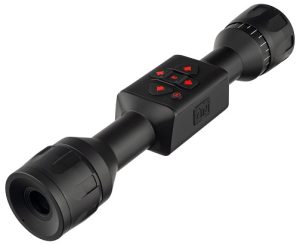
The growing availability in thermal scopes has led to a surge in popularity for nocturnal hunting pursuits like coyotes and hogs. The result is that this increased consumer demand has spurred dozens of companies to enter the market and offer thermal scopes available to a more diverse group of shooters and hunters as never before. Whether you’re looking to get your first one or upgrade to an more modern model, this article will help you discover some of the best thermal scopes so that you, too, can participate in the fun.
Best Thermal Scopes In 2022
- Best for the Money: OPMOD Thor LT 3-6x
- Best Over $5000: Trijicon IR Hunter MK3
- The Best Thermal Scope for Under $5000: AGM Secutor TS25-384
- The Best Thermal Scope for Under $2000: ATN Thor HD 384 2-8x
- The Best Value Thermal Scope: ATN Thor 4 384 1.25-5x
- Ideal for hunting: ATN Thor LT 160 3x
- The Best Hot Scope for Hog Hunting: Sig Sauer Echo 3
- Best Clip-On Thermal Scope Burris BTC 50
- The best surveillance tool: Trijicon IR-Patrol IRMO 300 Rifle Kit
Things to consider before purchasing an IR Scope
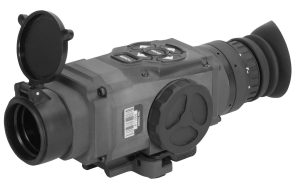
I’m sure you’ve figured it out by now it’s true that best thermal scopes aren’t cheap. Most people aren’t going to invest an enormous amount of money on a thermal scope on a whim. There are some things that you should think about first before making a decision on what thermal scope is the best choice for you. (Or, honestly, if you even actually require one or that money is better spent elsewhere.)
If you search online, you can locate companies offering thermal scope rentals. This is a great way to test different models and get a feel for the features you like best prior to making a purchase. Thermal Scope 3-12x.
Naturally, the decision lies with you however, if you do decide that your next major gun-related purchase will be the purchase of a thermal scope and you are considering it, here are some of the things you need to consider before spending your hard-earned cash:
Battery Life
There’s a lot of technology packed into a thermal scope, and it’s got to have some kind of battery that can power it. Not all batteries are created in the same way, and you need to ensure the battery in your thermal scope will be powered up for the time you need it. That means you should take into consideration how long you plan to use the scope for in one time period. Also, how long does it takes to charge the scope, and what will spare batteries cost.
Extra Features
Certain thermal scopes offer WiFi, GPS, Bluetooth and more. They’re all fantastic features to have however, you must take a look at what you’ll be using the thermal scope to do and whether these additional features are worth it or not. For example, do you really need to be able for streaming of your scope picture to a mobile device?
Price and Budget
The best thermals are going to be over $5000. Although these are typically the most expensive scopes you can buy, you’ll get practical applications from the $2000-$5000 range. If you’re searching for a bargain thermal scope under $1000, it’s unlikely to find one. There will be some thermal scopes that cost less than $2000 but they should be brand-specific to ensure a good assurance of warranty and money-back guarantee since quality control issues are to be anticipated in this price range.
Size/Weight
Thermal imaging scopes are heavy and big. The average weight of a thermal scope for a rifle scope is 2 pounds. The light thermals weigh between 1-1.5 pounds which is comparable to regular daytime rifle scopes. Although thermals may be around the same length of conventional rifle scopes, and even smaller, the internal components needed to provide thermal imaging makes them wider. Their overall size and weight will affect the hunting or tactical weapon and scope system.
An option that is lightweight and compact may be to consider an attachment system that clips onto your scope. It’s not just a matter of reducing the weight and size, but they’re made to work in front of your daytime scope and are easy to remove and attach.
Operation Range
Thermals can give you over 1000+ yards of detection range on targets, regardless of day and night conditions. However the distance that you are able to recognize and pinpoint what your target is will be significantly shorter.
These ranges will vary between manufacturers models, models, as well as quality. The thermal detector’s sensitivity will be the primary factor you need to study. Increasing magnification can help to quickly detect and recognize distant targets, however it may also lead to poor pixelage resulting in a pixelated image. The resolution of the display will determine the quality of the image. Thermal Scope 3-12x.
Which is Better Thermal Or Night Vision?

Instead of focusing on the fact that a night vision scope is better than thermal or in the reverse direction, the main issue is:
Which option would work best for your requirements and budget?
When you’re done with this article, you’ll know precisely what the solution is.
Let’s get started!
Night Vision
Night vision operates by taking light and reflections light and transforming them into the crystal clear image.
So, it requires some sort of ambient light to function.
If you’re shooting at night the moon’s light and stars usually provide enough light. Modern models have infrared illuminators which function like flashlights for the scope but aren’t visible to the naked eye.
If you’re browsing markets for night vision optics You’ll find different classifications for them.- Gen II, I or III. In simple terms, the greater the grade, the better the quality.
There’s also a newer category that includes night vision scopes that is called Digital Night Vision.
The standard night vision displays the traditional black and green colors, while the updated digital night vision is typically presented in white and black across the screen of the LCD.
Pros
- Night vision delivers a higher quality image.
- It permits you to distinguish between the finer details. Furthermore, night vision scopes are cheaper and more compact in size. It’s not subject to cold weather.
Night vision technology has been in use for a long time, much older as thermal optics. Night vision scopes can be found be mounted on rifles and are overall more rugged, stable, and absorbs recoil like a pro.
Cons
- Its requirement for ambient light makes night vision limited.
So unless you have an infrared illumination device, it’s pretty much unusable in dark areas. It’s not recommended to use it in bright sunlight, as it can will be permanently damaged if exposed to a intense light.
Thermal Imaging
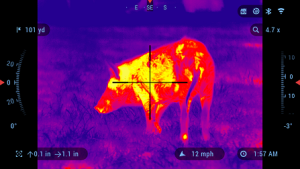
Thermal scopes detect radiation or heat given off by living objects. The thermal imaging process uses a particular kind of lens that focuses upon infrared light and produces an image known as a thermogram. This thermogram then transforms into electrical signals that form the image you see that appears on the screen. Thermal Scope 3-12x.
Pros
- Thermal vision is a little more flexible since it can be used in any light conditions. One of the greatest benefits for thermal imaging scopes is that they work well in both day and night and do not need infrared light. On top of that you’ll be able discern smoke, dust, and fog with ease. This is the reason firefighters utilize thermal technology.
Cons
- One of the main drawbacks associated with thermal imaging can be that it’s quite heavy to carry around. They can also be expensive, and you might have to undergo training to be able to read the images correctly. The battery’s life span is typically restricted, and the quality of the image can be negatively affected by colder temperatures.
FAQ
How long does a Thermal Scope Last?
On average, thermal scopes last almost eight hours with a single charge. Different models last from 2-10 hours. Recently, ATN has managed to create ultra-low consumption thermal scopes that can provide up to 10+ hours of continuous use.
Why do Thermal Scopes cost so much?
In general, thermal scopes cost a lot because of the advanced technology components. There are also price differences for various features, such as wireless connectivity, palette modifications or ballistic applications, and more. Be that as it may, thermals start at a reasonable price point of $1000.
How far can Thermal Rifle Scopes See?
How far thermal rifle scopes can see will depend on the resolution as well as magnification levels. In general, even low-end thermals will detect heat signals as far as 1,000plus yards. The most advanced thermals are able to detect heat signatures that extend beyond 4000 yards, however the identification of targets is a different matter.
Can You Make Use of Thermal Scope to use it in Daylight?
In contrast the night vision scopes however, you can utilize thermal scopes instead. You can use a thermal scope throughout the day without harming components. Instead of increasing light, thermal scopes read heat signatures. The dual-use feature is an important benefit of opting for thermal rather than night vision and getting the most of your purchase. Thermal Scope 3-12x.
